Travel to Chile

Private tours and self-drive journeys

Tailor-made travel in Chile

More than 20 years

    An English-speaking team based in Santiago

Tailor-made

    Every itinerary designed especially for you

Concierge service

    A local network that handles your requests on the ground

24/7 assistance

    An English-speaking line reachable at any hour

À LA CARTE EXPERIENCES

Our selection for a tailor-made journey through Chile

A balloon flight over the desert at first light, a night in a remote lodge along the Carretera Austral, a tasting at an estate where wine is still made the old way: these are the moments, chosen one by one on the ground, that make up your tailor-made journey through Chile.

EXPLORING CHILE REGION BY REGION

Chile from north to south: what to see on your journey

The Far North: Arica, Putre, Iquique and San Pedro de Atacama

The Atacama is the driest desert in the world, and yet life is present everywhere. Some areas may go fifty years without rainfall. The turquoise salt lagoons of Los Flamencos, volcanoes rising above 6,000 metres, flamingos moving in silence at 4,500 metres on the bofedales of Caquena, the mineral formations of the Surire salt flat: this Far North reveals itself stage by stage, each one different from the last.

San Pedro de Atacama is the anchor point for everything that happens at altitude. The El Tatio geysers erupt at dawn in a silence that the altitude makes more absolute still. Lauca National Park and the nevados of Suriplaza, Humberstone, a UNESCO World Heritage saltpetre ghost town, the tracks running along the Bolivian border, 4x4 or private-driver circuits from San Pedro: each stage adds a layer to a region we consider one of the most fascinating in the country.

The Near North: Elqui Valley, La Serena and Copiapó

The Near North is Chile between two worlds: neither desert nor valley, and yet both at once. It holds one of the rarest phenomena on earth: the flowering desert, when exceptional rains bring a carpet of multicoloured flowers out of the ground across hundreds of kilometres between La Serena and Copiapó.

The Elqui Valley produces the finest piscos, in Muscat vineyards framed by arid slopes. At nightfall it shifts entirely: millions of stars, absolute silence, and the telescopes of the world's greatest observatories trained on the same sky. The neighbouring Hurtado valley shares the same sky and the same sense of scale.

Wine tourism, astronomy, desert landscapes: the Near North fits naturally as an extension to a stay in the Atacama, or as a stage on a north-south journey.

The central region: Santiago, Valparaíso and the wine route

Santiago has the rhythm of a city that has reinvented itself, district by district. Its museums, its food scene and its restaurants that matter make it one of the liveliest capitals in South America. The city can be visited at the start of a journey to set the scene, or at the end to enjoy it differently. Less than two hours away, Valparaíso rises across hills covered in street art, criss-crossed by century-old funiculars still in service. A UNESCO World Heritage port, Valparaíso rewards endless exploration.

The Centre is also the heart of Chilean wine. The wine route crosses seven prestigious valleys, from Casablanca to Colchagua, through rural country shaped by huaso culture. The viñas receive visitors by private appointment, with guided tastings far removed from standardised tours. We know the tables that matter and the places travellers in a hurry never see.

Easter Island: Hanga Roa, Orongo and Rano Kau

Easter Island is Chile's surprise: you do not expect to find Polynesia this far from the continent. At 3,700 km from the Chilean coast, Rapa Nui can only be reached from Santiago. That distance is precisely what has preserved the island from everything else.

Close to 900 moai watch over the island, raised by the Rapanui people to hold the spirit of their ancestors. The crater of Orongo, on the rim of the Rano Kau caldera, looks out over both the ocean and the volcano. A UNESCO World Heritage site, Rapa Nui also offers volcanic beaches, turquoise water and a gentleness of life that makes you want to stay longer than planned. Quality accommodation books up far in advance: that is the condition for making the most of every day on the island.

The lake and volcano region: Pucón, Puerto Varas, Chiloé and Puerto Montt

The lake and volcano region marks the shift towards a wilder, denser, more intense Chile. Araucanía, Los Ríos and Los Lagos form a territory of rare density: thousand-year-old araucarias, lakes ringed by snow-capped volcanoes, natural hot springs and active volcanoes including the formidable Villarrica. Mapuche culture, which resisted the Incas and then the Spanish for centuries, is still alive in the rural communities: it is one of the most powerful encounters Chile has to offer.

To the south-west, the Chiloé archipelago lives at its own pace. The palafitos and the UNESCO World Heritage wooden churches give the island an atmosphere out of time. The myths passed down by sailors from one generation to the next are as much a part of the journey as the landscapes. It is also the starting point for the Andean lake crossing between Puerto Montt and Bariloche, one of the most spectacular routes in South America.

This is one of those regions that reveal the true face of Chile: not spectacular at first glance, not easy to sum up, but impossible to forget once you have set foot there.

Patagonia: the Carretera Austral and Torres del Paine

The wind, the light that changes by the hour, the glaciers calving in silence… Chilean Patagonia is a territory you feel before you understand it. It begins with the Carretera Austral, 1,240 km of legendary road crossing native forest, snow-capped peaks and turquoise rivers. Lake General Carrera and its marble cathedrals sculpted by erosion, the Northern Ice Field covering more than 4,200 km²: every kilometre opens onto a landscape unlike the one before.

Cruises through the Chilean fjords, between Puerto Montt and Punta Arenas, give access to glaciers and channels the road cannot reach. Further south, the granite towers of Torres del Paine pierce the clouds with a force nothing quite prepares you for. Pumas, guanacos and condors can be seen along the trails, often only metres away. Tierra del Fuego marks the end of the world, where the Andes plunge into the sea.

This is the region our teams are asked about most, and with good reason. Our advisers travel through it every season to refine itineraries, test accommodation and work with weather that changes everything.

Antarctica: the white continent, the Weddell Sea and the South Shetland Islands

Travelling in Chile also means being able to reach the white continent. From Punta Arenas, the adventure is made aboard an expedition vessel, with zodiac excursions bringing you close to the ice and to the penguin colonies of the South Shetland Islands. Access is also possible by flight and then by ship into Antarctic waters. The Weddell Sea holds some of the finest icebergs, in a setting of cold, absolute beauty.

It is one of the most unspoilt territories on the planet, where wildlife lives without permanent human presence. A southern discovery few travellers in the world have the chance to experience.

TRAVELLER STORIES

They travelled to Chile with Korke

Christiane and Agathe
Published in 07/2026
Christiane and Agathe

3 months by bus between Chile and Argentina

Published in 07/2026

The Korke agency perfectly understood and respected my expectations (and it's the only one that did).

The trip follow-up and responsiveness were exceptional, whatever the circumstances, and I especially appreciated their help and care when I was injured in an accident. The itinerary, the outings and the on-site contacts, worked out together, completely satisfied me.

All the[...]

Christiane and Agathe
Bernard and Nicole
Published in 05/2026
Bernard and Nicole

3 weeks in Chile

Published in 05/2026

I thank Pauline and the whole Korke team for letting us make the most of this magnificent tour of Chile, planned to perfection: Santiago, Valparaíso, passing through the Casablanca Valley and Isla Negra; then the lagoons, geysers and stars of the Atacama Desert, and finally the mysterious Easter Island, where we rediscovered the Polynesian atmosphere.

We fully enjoyed the local cuisi[...]

Bernard and Nicole
Laurence and Jean-Cyril
Published in 04/2026
Laurence and Jean-Cyril

Argentina, Chile and Bolivia — an exceptional trip

Published in 04/2026

As seasoned travelers, we are used to roaming the world. For our grand tour of South America, we are truly delighted to have chosen Korke.

The trip was exceptional: timing, hotels, guides — everything was carefully chosen by the teams to put together a tailor-made trip, exactly as we had imagined it. We traveled through Argentina and Chile from north to south, discovered the magnific[...]

Laurence and Jean-Cyril
Sylvie and Bernard
Published in 04/2026
Sylvie and Bernard

Atacama Desert and Easter Island

Published in 04/2026

A competent and responsive agency — I recommend them for a worry-free trip!
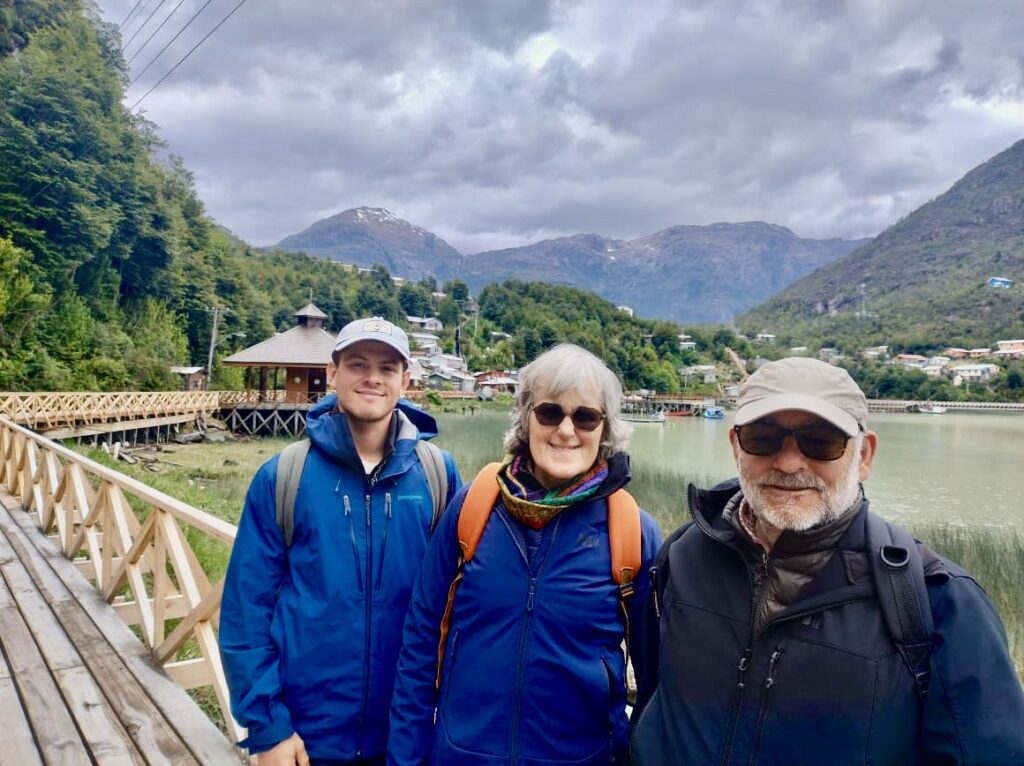
Sylvie and Bernard
Sylvia and Bernard
Published in 03/2025
Sylvia and Bernard

Santiago, Valparaiso and the Southern Route

Published in 03/2025

Very good organization throughout the route, with guides and drivers always on hand.

An experience worthy of our second trip with the Korke agency.

Sylvia and Bernard
YOUR JOURNEY, STEP BY STEP

From inspiration to departure: your journey designed to measure

Contact
1

Creating a personalised itinerary

We propose an itinerary that is personalised and consistent with your request, refining it in line with your feedback to select experiences perfectly suited to what you are hoping for.
Devis
2

Drawing up
a tailored quotation

Once your itinerary is settled, we send you a quotation promptly so that the final arrangements for your journey can be completed.
Preparing
3

Confirming
your stay

As soon as you confirm, we send you your chosen payment method for the deposit. Our team then sets about bringing your tailor-made journey to life.
Cest parti
4

Everything is ready,
off you go!

Before departure, we talk things through in depth to give you advice and practical information. On the ground, we personally hand you your travel book and remain available 24/7.
FREQUENTLY ASKED QUESTIONS

Preparing your journey to Chile: the essential questions

1. What's the best season for my trip to Chile?

Chile opens its doors to you all year round, with ideal seasons for each region:

  • Explore the North: the best seasons to visit are from October to December and from mid-March to the end of May, as the period from January to March is subject to rainfall. It’s also possible to travel in the middle of winter, from June to September, as this is the dry season, and the days are generally very sunny at this time, although shorter.
  • Discover the South: the best period is from October to April, when the days are longer and the climate milder, but Patagonia also offers unique experiences in winter, with snow-covered scenery from May to September!
  • Combine north and south: October to late December or March to mid-April are the ideal periods to enjoy the best weather conditions, both in the north and south of the country.
  • Meet the marine wildlife: from October to March, you can observe Magellanic penguins, Humboldt penguins, austral dolphins and the only colony of king penguins in Tierra del Fuego. The peak whale-watching season in the Francisco Coloane Marine Park is from January to April.

Our advisors are available to help you choose the period that best suits your expectations and desires. Please don’ t hesitate to contact us.

2. What clothes should I pack and what should I put in my suitcase?

To help you prepare for your trip to Chile, here are a few clothing tips:

  • Light clothing: for Santiago and the north of the country, where summers are very hot, prefer light, breathable clothing.
  • Three-layer technique for the top: adopt the three-layer technique to adapt to climatic variations. Start with thermal underwear, add a fleece, and finish with a waterproof jacket or windbreaker (Goretex type). A compact, technical down jacket can also complement the fleece for extra warmth without cluttering up your suitcase.
  • Bottom clothing: waterproof walking pants and thermal tights depending on the activity. Don’t forget gloves and a hat for cooler regions.
  • Footwear: bring comfortable shoes (sneakers and sandals) and light, waterproof walking shoes, suitable for the different stages of your trip.
  • Sun protection: remember to bring a hat or cap, sunglasses, sunscreen and lip balm to protect you from the sun.
  • Mosquito repellent: mosquito spray is recommended, especially in summer in the lake region where horseflies may be present.

3. What are the formalities for entering Chile?

To enter Chile, make sure youhave the followingformalities:

  • Valid passport: your passport must be valid for the duration of your stay.
  • Round-trip air ticket: make sure you have a round-trip air ticket.
  • If you’re traveling with a minor: if a minor is traveling with only one parent or with grandparents, an authorization to leave the country signed by the non-accompanying parent(s) is required. Other documents may be required, so check with your consulate.
  • Customs form (Agricultural service): fill in the SAG form form, available online the day before or the day of your departure, to facilitate border crossing. You can also complete the form on arrival, provided you have an Internet connection.

4. What type of electricity and plugs are used in Chile?

Electric current in Chile is 220 volts with a frequency of 50 hertz (Hz). Electrical outlets are type C and L.

Type C: European two-pin round plug

Type L: three-pin round plug.

It’s advisable to bring an adapter for your devices, although most hotels have adapters available at reception.

5. What payment methods are available in Chile?

  • Card payments: Visa and Mastercard are widely accepted throughout the country, whether in restaurants, hotels or shops. Before you leave, it’s advisable to check with your bank the conditions for using your card in Chile, particularly as regards conversion and withdrawal fees.
  • Cash withdrawals from ATMs: ATMs are available in all Chilean cities, allowing you to withdraw pesos easily. This is a convenient and safe option, but bear in mind that withdrawal fees may apply, depending on your bank.
  • Cash and exchange offices: if you prefer to use cash, we recommend that you take Euros or Dollars with you, and exchange them on site. Exchange bureaus can be found in all cities, and generally offer better rates than those at airports, where rates can be less favorable.

With these different options, you can manage your payments with complete peace of mind during your stay in Chile.